
Halloween is, without challenge, my favourite holiday. The beautiful colours of flora as the world slowly moulds away into winter, the clear, bright light you get after an autumnal storm, & the gentle temperature which accommodates your entire wardrobe (so long as you can layer them right!); and all this is just the backdrop to the event itself.
Whilst I don’t dress up for the 31st, I still try to indulge in a spooky atmosphere as much as I can. Horror has always been my favourite genre, and a personal favourite topic academically. It can be incredibly rich for analysis beyond the usual tropes; horror is so much more than just trauma monsters when done right and can be a great setting for exploration of a wide array of subject matter in a way that reaches the most suppressed areas of your subconscious. Alternatively it can just be good gorey fun! Wether you like to admire impressive visual effects, or want to be a total film snob, or just want some popcorn-movie brain-dead entertainment, the genre has a lot to offer.
Not every year, but when I think I’ll have the time, I try to challenge myself to watch 31 new horror films (or at least one that I’ve not seen for a good few years) every day on the run up to Halloween. It’s rare I actually manage to do it every day to be totally upfront, and I’ll definitely have to have a solid movie marathon before the end of this month to get the numbers up, but personally I like to treat this as an opportunity to engage in a deeper way with a genre that informs a lot of my work.
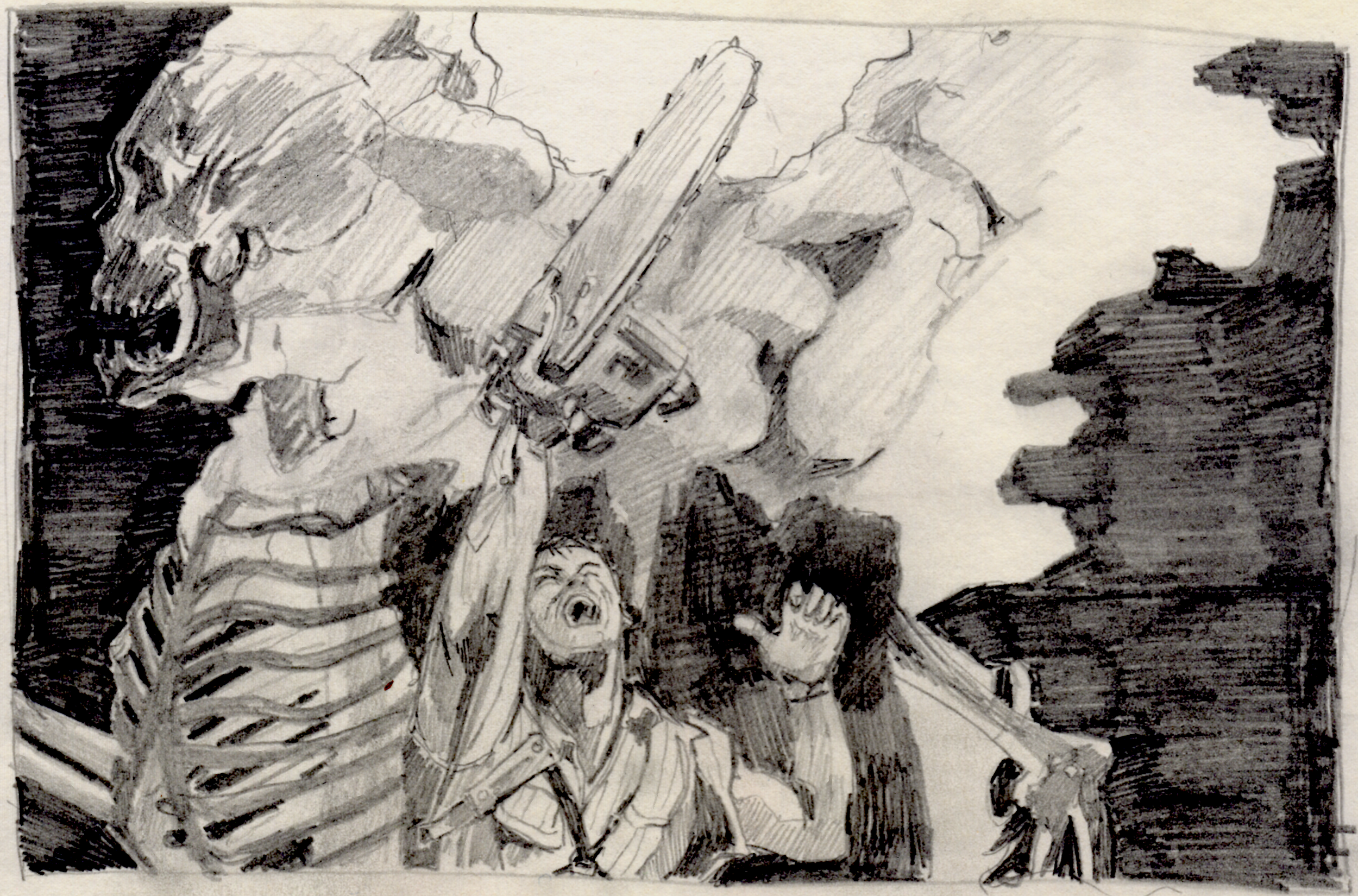
Sketch inspired by Army of Darkness {Raimi, 1992}
As a creative practitioner, and particularly within illustration though, films can be a great source of visual education, and horror is uniquely posed to be particularly visually educational. All films are reliant on visual storytelling, but horror has so much potential in the manner it builds tension and reveals information into creating compelling scares. The pace of build-up and revelation is a fundamental skill to any sequential storyteller; but by limiting my scope to a singular genre, I feel like I can be far more aware of the different directional approaches there are to creating a rising tension and release that is intended to scare. The pace of a slasher is inherently different to the pace of a stalker killer, and identifying the subtle differences in how their varying tones is communicated helps give nuance to the way I pace my own narratives. The Purge (Demonaco, 2013) is a stalker-killer story. The majority of the film locks you into an enclosed space, in this case a family home, and tension builds from the audience’s rising familiarity with the given space, contrasted by the constant cuts to the camera outside the home of their stalker-killers. Claustrophobia and cabin-fever slowly chip away at the feeling of comfort within the home, whilst the camera feeds provide the occasional tension spike of the external, unquantified threat outside. This tension is then cut when the external breaks into the internal, and then again to another level when violence itself breaks out. Compare this to the slasher-killer of In a Violent Nature (Nash, 2024), a film which utilises an over-the-shoulder perspective from the killer’s point of view to communicate a consistent sense of threat. Tension constantly rises, supported by the audience’s diegetic understanding that we can’t rely on a perspective character within the group to latch onto as a safe contender for survival. By subverting this classic slasher trope through perspective, this film creates a constant state of dread, which rises into a tension released by the revelation of whatever massacre our point of view has inflicted on it’s current victim.
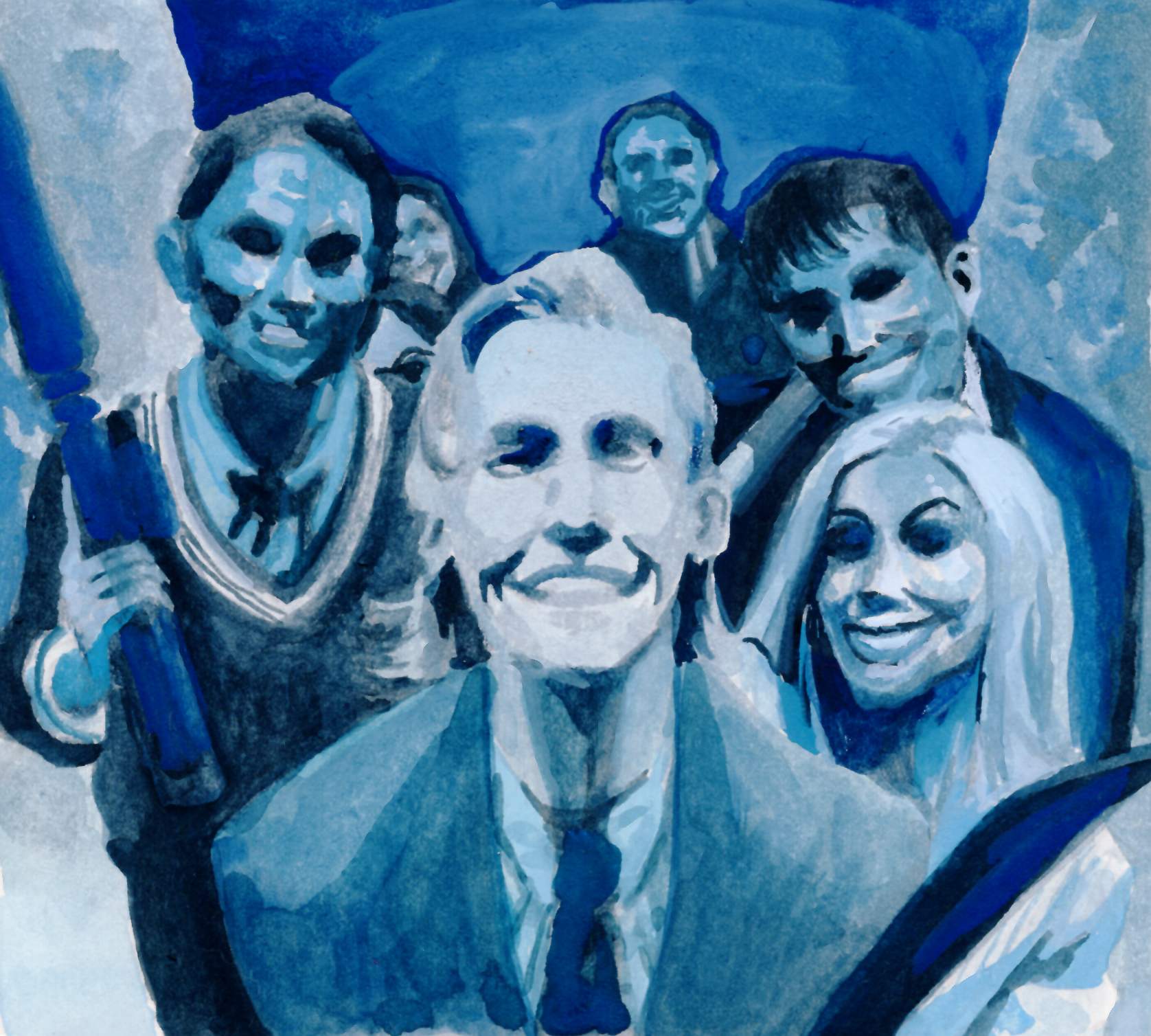
Gouache study from still from The Purge
Film’s benefit to illustration goes beyond story structure inspiration. The way horror utilises colour as visual signifiers can be a great source of inspiration. Red Rooms (Plante, 2023) makes brilliant use of harsh over-head lighting to communicate the bleak factual segments of the film, largely set in the courthouse, but then indulges in unnatural, surrealist lighting for the segments centred around the protagonist’s relationship with the digital; which then culminates in an intense visual sequence at the film’s climax as our protagonist succeeds in her grim task. Likewise, I Saw the TV Glow (Schoenbrun, 2024) uses a neon pink, narratively linked to The Pink Opaque, to communicate feelings of connection and disconnection. This singular colour is used to evoke nostalgic, warm feelings in the audience, and then later despair; made even worse by our prior trust in it.
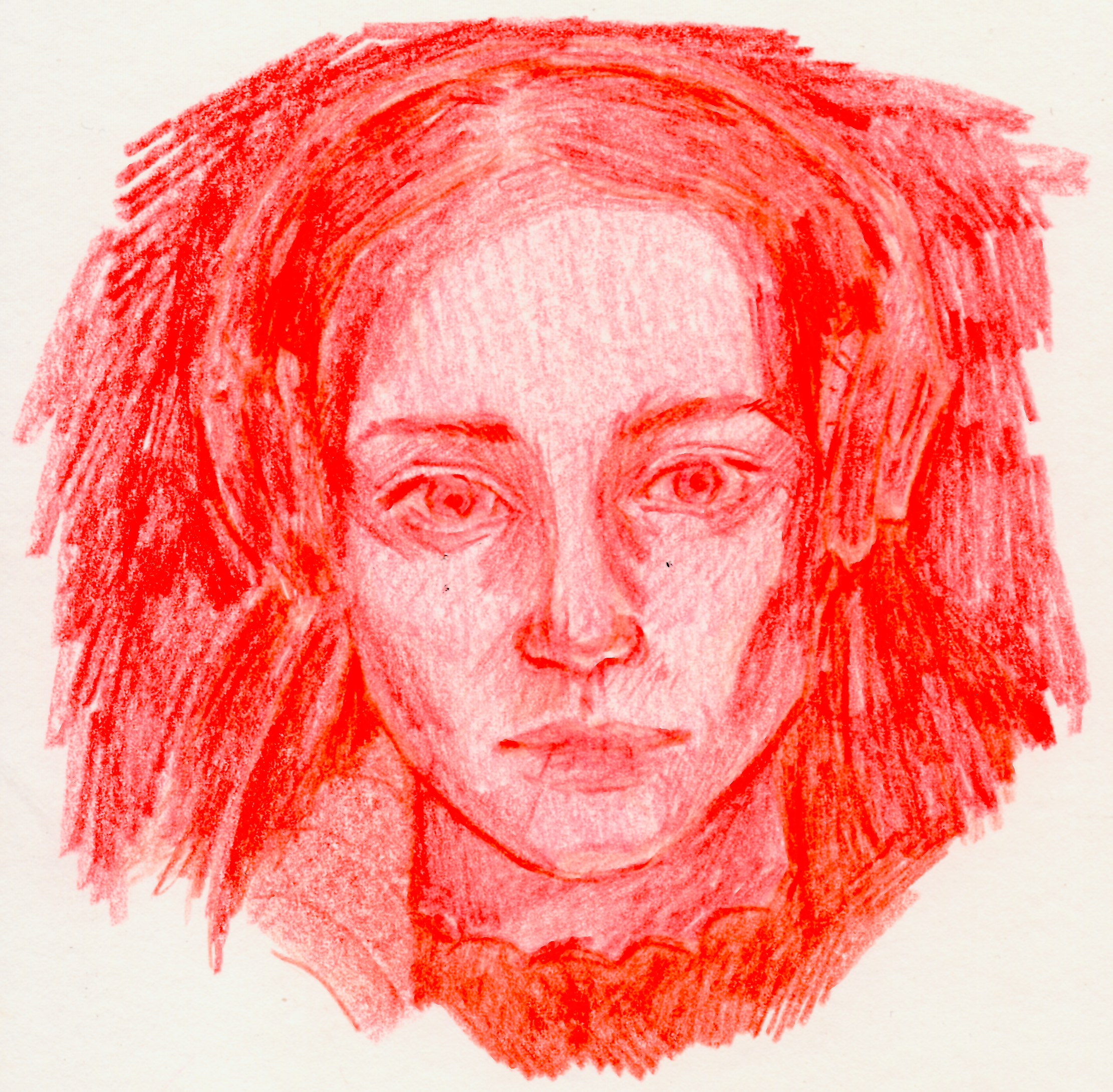
Coloured Pencil sketch from Red Room
Likewise, in terms of pure composition films can be a great source of fresh inspiration. Letting your audience make connections to your inspirations though visual homage can provide further depth to your narratives; a perfect illustrative example might be the iconic skeleton spread from Berserk (Miura,1990); you know clearly when another storyteller references it, and their knowledge of Berserk as a text might well help to colour an audience’s understanding of their intentions in the theming of their narrative. Filmic canon, akin to literature, is a cultural reference point that storytellers should aim to contribute towards and simultaneously develop (like how Black Swan (Aronofsky, 2010) builds from Perfect Blue (Kon, 1997)). Chances are your intended audience will already be drawn to similar media that inspires you, and trusting their cultural knowledge to bring in adjacent themes to your work is a tool not to be overlooked. Reference is also crucial from a draughtsmanship perspective. Back in January, I challenged myself to draw from 31 films selected at random from FilmGrab, a great resource for static film shots! I absorbed so many compositional tricks by drawing directly from these films. The sketches I made in turn became a shorthand collection of compositions to draw inspiration from for future projects! I aim to return and build out my collection again at the start of next year.
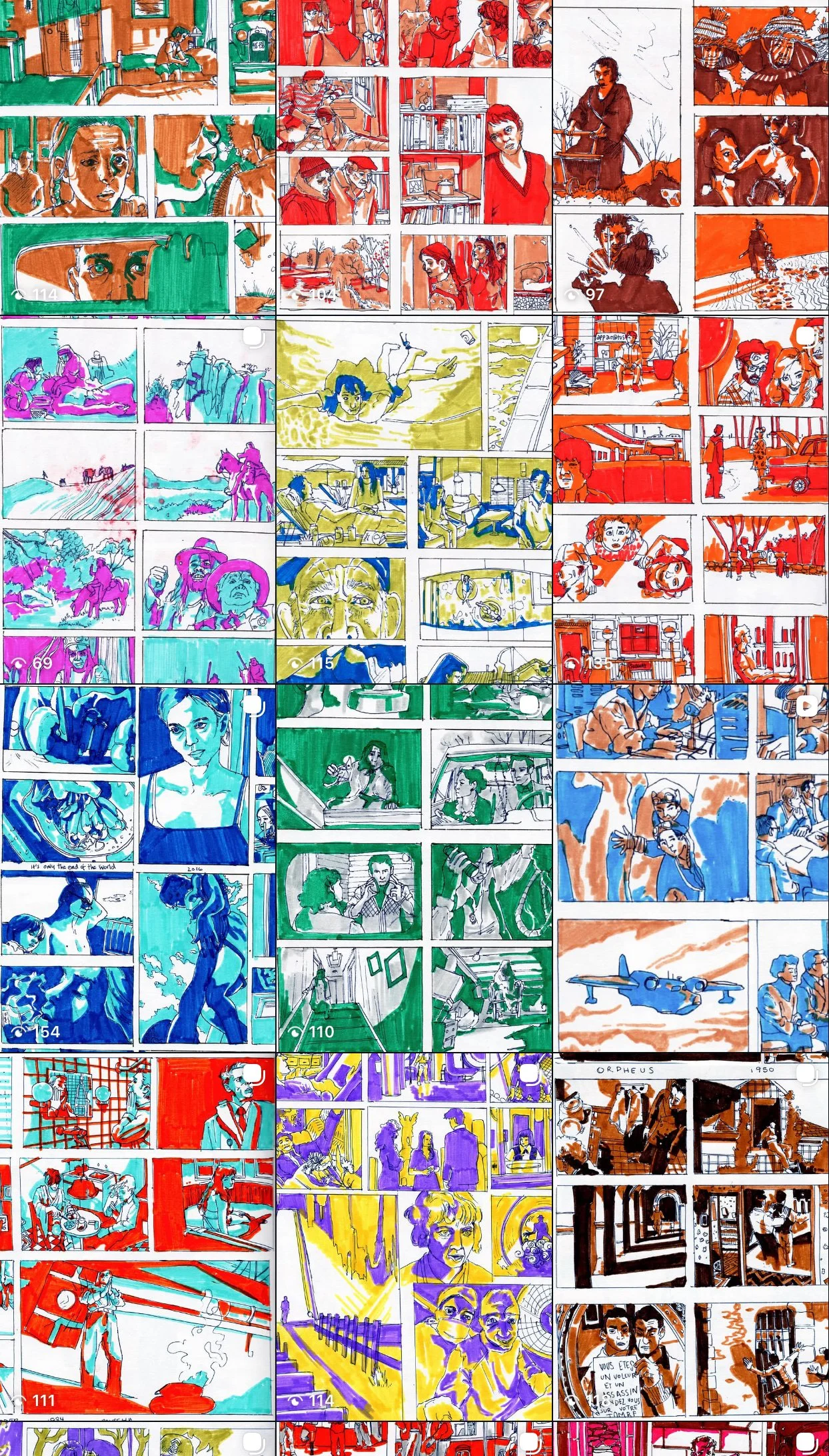
My ‘Good Habits for the New Year’ efforts, featured on my instagram page
Basically what I’m trying to say is no, I promise I’m not just wasting time watching a bunch of movies just to log them on Letterboxed; I’m ACTUALLY studying! (You’re buying it, right??)
